Banner photo of Larry Eugene Meredith, Ronald Tipton and Patrick Flynn, 2017.

The good times are memories
In the drinking of elder men...

-- Larry E.
Time II
Showing posts with label youth. Show all posts

Thursday, October 31, 2013

Real Essence of Cool

When I was a lad I wanted to be cool. Don't we all long to be cool when young? Of course to be cool means avoiding those things which are uncool.

One of the things that were decidedly uncool at that time were rubbers. Now I know in the popular vocabulary "rubbers" has another meaning and I am not talking about those kind. I am talking about the ones you slipped over your feet and nowhere else. Actually you pulled them over your shoes, sort of sox for the outside.

All the ones I saw then were black and shiny. They were made of a rubbery material, the same stuff boots were often constructed from. They were waterproof, which was the whole purpose. When it rained I would hear my mother yell, "Put your rubbers on so you don't catch a cold!"

That was the last thing I intended to do. No way I wanted to be caught, even caught dead, wearing rubbers. I would try to slip out of the house without them, but sometimes my mom was hovering about me and I had no choice but stretch those ugly black shells over my shoes. Once outside I would look for a place to ditch them where I could retrieve them after school.

It was just as bad come the winter snows, only then it was galoshes, by golly gosh! These were
exponentially more uncool than even rubbers. They were black too and they fastened up the front by snapping closed these metal tabs. If you are unfamiliar with these grotesques, they were what the Old Man wore shoveling snow in "Home Alone", only he didn't snap his up. He let them flop about.

I tried my level best to avoid clamping those on my feet as well. They just weren't cool.

No, it was much more cool to sit in class all morning with wet feet and cold soggy sox, risking a chill and ruined shoes.

Another thing to be avoided as all costs, when I was a boy, was the book bog. They existed. My misguided parents even gave me such an object for my birthday one year. Better to gift such an atrousity in June in time for the next school year than at Christmas halfway through. It was a very fine

book bag, as such things went. It was some sort of faux leather, a little too light perhaps, with three inner-departments and a flap that had a little twist knob through a slot to hold it closed. It had a pouch on front for pencils and other small tools of the young pupil trade, like compasses and triangles and erasers.

At least it wasn't embroidered with lassos spelling out Roy Rogers.

It was my intent that it should never see the light of day. It would have been humiliating enough in elementary school, I couldn't imagine the slings and arrows I would have suffered lugging that piece of luggage to Junior High.

No, it wasn't cool. Being cool was carrying your books, hooked by you hand and supported by your

lower forearm and pressed against your hip. This wasn't too bad coming home from grade school, especially since I lived right across the street from East Ward. It was somewhat different carrying the load from Downingtown Junior High to which I walked a mile to and from. Not only was there the hike, but the books had grown thicker and heavier and the teachers, showing little mercy to coolness, gave more homework.
This was not easy. Some books tended to be slippery and tried sliding away from the stack as you walked. Sometimes an edge cut into the flesh of your forearm, which grew more and more uncomfortable as you journeyed along. Occasionally you might try switching the load from your right arm to your left, but when balancing several tomes and a notebook it was easy to lose your grip. There is little of coolness it picking up your fallen schoolbooks and even less if you are chasing papers down the street that have fallen from between their pages. And what if that expensive History book should land in a mud puddle and your parents have to pay to replace it. Yike!

The young females of our species would cradle their books in their arms pressed against their chests. This was a more effective and more controlling way to handle a load of educational volumes. Although this is a perfectly acceptable way for a running back to secure the football, there was no way a "cool" dude was going to carry his books like a girl.

Nope, better to struggle home and then stand, after dropping the stuff on the table, with a sore wrist, numb fingers and a tinkling arm.

Now today when I see school children they are wearing back packs. It apparently is not uncool to do so, because every single one seem to indulge in this practice. Even outside of school you see them ambling along with backpacks on to carry their video games to friends houses or whatever.

I wonder why we didn't think of that when I was a boy? I was in the Boy Scouts and all we Boy
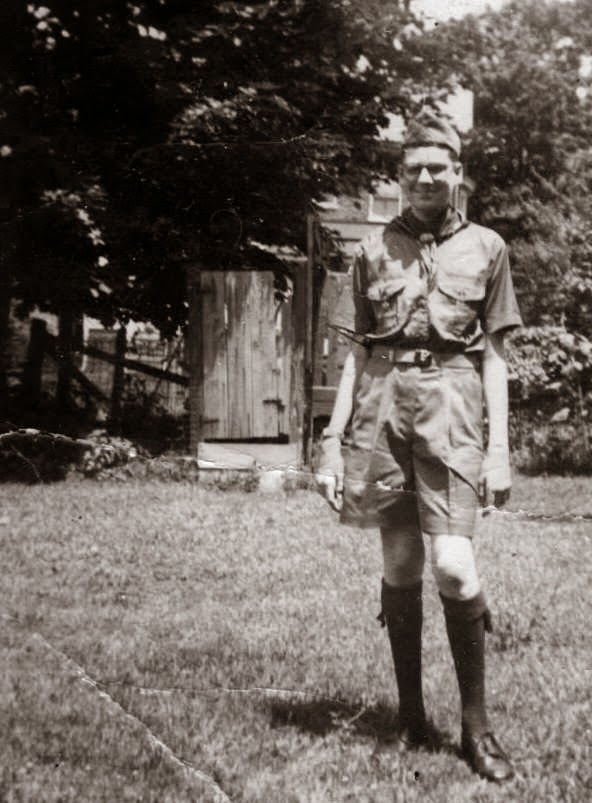
Scouts possessed backpack, or knapsacks as we called them then. Why didn't we strap them on to bear our books about? Think of the advantage, our hands would even be free to throw the random snowball or pull a girl's hair. Still, now that I remember, being a Boy Scout wasn't considered all that cool back in my childhood years either. Maybe it was the short pants and tasseled knee socks, but definitely not cool.

Of course, these examples are only a couple of the many no-no's if you wished to look cool. However, it didn't make a hill of beans if you avoided all the pitfalls of uncool paraphernalia or how much you dressed yourself up in hip (as we said once upon a time) couture and sunglasses, with cigarettes rolled in your T-shirt sleeve with one a-dangle from your snarling lips, you somehow never quite made it into that cool crowd you so envied and hungered for acceptance from.

You know, those guys sniffling from the cold they got not wearing their rubbers (and sometimes things they got from not wearing those other kind of rubbers either), with the sprained wrist from toting books while eschewing book bags and with the infection in their arm from carving their girlfriends name down its length with a
rusty penknife. Somehow you just couldn't be as cool as those cool guys.

This is probably because you lacked the true essence of Cool, that four-letter synonym, D-U-M-B, dumb!

Tuesday, December 6, 2011

Streets that Bind -- Washington Avenue

From the time I was born until I married there were seven addresses in five townships; from my marriage to the present, eleven in eight places. These 18 addresses may be even more remarkable considering I've been in this house for the last 30 years and here is where I think of as home.

But if one asked about my boyhood home, I think of  Washington Avenue. I moved there three times, twice to the same address. I lived on that street for 13 of my first 15 years.

It wasn't the longest street in the world, although it seemed so when, as a child, I walked it. It ran probably less than a half-mile end to end. It ran one block east of my own block, but I seldom had reason to go that way. It ran two long blocks to the west of mine and at the end of these, just before the creek, were my church and the movie theater. A half block off Brandywine Avenue also called Creek Road, at 120 Washington, was an apartment building where my life-long best friend lived when I first met him.  (I've told the story of our meeting in "The Kid Met Him in the Funny Pages".)


On the left is 120 Washington as it looks today (actually not much different from then) and my not quite yet best friend sitting in the window of his apartment there.

Gee, he was kind of cute back in those days.

I knew someone else that lived in those apartments during those early years, a blond girl. Her name was Mary Jane and I had a crush on her through most of my elementary grades right into junior high school, although I never acted on my feeling for her and asked her out. I was friends with her and she came to my birthday parties.

We were eight years old in this photo and you won't find any other pictures of me getting quite so chummy with a girl that early on in my life. Now it is true I kissed a girl named Michele around this same time period (and got in a bit of trouble because of it) but I never had any true feelings for Michele as I secretly did for Mary Jane.

I suppose I should explain how I came to be a Washington Avenuer.

The first time we moved there I was six months old and it was to be my third home. My first had been in Modena and my second at Whitford. I've never really known why we moved to 424 Washington in town that Christmas season. We moved there with my maternal grandparents, who were the actual renters of the house (they never owned it). My parents had moved in with them at Whitford earlier in the year from Modena, my father's boyhood hometown. (Photo left: my mom holding me before the porch of 424.)

I know why my parents moved from the Modena apartment (bedbug infestation combined with financial need) to Whitford; but why the move shortly after to town I don't know. The "big house", as they called it, in Whitford appears to be large enough to accommodate two families, in fact, was probably larger than 424 Washington Avenue.

The Whitford house was where my mother grew up, so it had been my grandparents long time abode and was near to my grandfather's own family roots.

They didn't own that place either. It was actually part of the George Thomas III estate. The Thomas family was one of the original settlers of the area and one of its most prominent families. I do not know if George Thomas choose to end the renting of this property or if the move was somehow related to the bombing of Pearl Harbor on December 7, 1941. Perhaps the beginning of the war in which my father would serve for several years prompted changes. (Photo right: my mom as a child at Whitford.)

We all lived in that house throughout the war years. I made two close friends on the block, Iva  and Bill. Iva was to remain a friend for always, but Bill moved away about the time I moved to 424 the second time and eventually we lost contact.

Why a second time? Why did we even move away from 424 a first time? Easy to explain, the war ended.

My dad had been in the South Pacific most of those first years at that 424 address. He got his discharge a couple years after the war ended and returned home in 1947. He got his first job as a long distance truck driver that fall, driving milk tankers for a man named Hines. A friend of his had told dad the company was hiring, but not to tell Old Man Hines he knew mechanics or he would never get outside the garage. Dad got the driver job instead at $100 a month and the house in the swamp.

There was this old home, half brick and half stucco, with scaffolding along one side, owned by the trucking company. It sat back from the highway, surrounded on two sides by a marsh, with a cornfield up the hill behind and a cow pasture to the East. Hines let dad live rent free because he was a returning vet, and thus we packed up our meager belongings and moved from 424 Washington for the next two years. (Photo right: me at the house in the swamp, 1948)

That house in the swamp was to have a great impact on my life and personality, but that is a different story. This one is about Washington Avenue.

So how did I get back there for the next five and half years of my boyhood?

Easy, my dad changed jobs for more money. In late 1949 he began driving for Atkinson Trucking; goodbye Hines, goodbye house in the swamp.

My folks moved back in with my grandparents at 424 Washington.  At some point a bit later, a house up the street became available for rent and my parents moved there. 417 Washington was a double house next to a Quonset hut of a garage, a business selling farm equipment. (And yes, during evenings or Sundays when this store was closed and empty, I did sneak next door to play on the tractors in the lot.)

That is a picture of 417 Washington taken several years after I lived there as a child.


I think Washington Avenue sticks with me so much in my memories because I lived there in those growing years. All the adventures of my boyhood are centered on that street, both good and bad. My best friend, Ronald Tipton, lived on that street when I met him. Our grade school was across the street from my home. 424 also means more to me than 417, probably because on weekends, when my dad came home from his trucking runs that kept him away from Monday through Friday, my parents sent me down the street to stay with my grandparents so they had alone time. (Photo right: 424 Washington.)

Eventually I will tell more tales of life on Washington Avenue.


Sunday, August 1, 2010

Broadway Kid and the Great Coca-Cola Caper

One day when The Kid was a young boy, probably somewhere around twelve, an idea was hatched to have an adventure. It wasn't The Kid's idea, but it was a long time ago and whose it was has been lost over the years. There were five guys, any of whom may have suggested it. And they all managed to get their parents permission, but whether they told their parents the whole truth has been lost in time too.

It was summer and very hot. Most people didn't have air conditioners back then, certainly The Kid's family didn't. They sometimes had a little electric fan that sat on a table in the living room and sometimes they just waved a magazine back and forth to create a breeze. Sizzling July and August nights were often sleepless matters of tossing and turning and sweating.

The idea was simple, they would camp out. Except they didn't really camp out, not in the sense of pitching a tent in someone's back yard. Instead they met that evening and spent the night in the loft of some garage behind one of the houses on Lancaster Avenue.

These were old houses along that stretch of the Lincoln Highway on the East side of town, some dated before the Revolutionary War. There was a lot of history within those couple of blocks. The Underground Railroad had a stop here during the years before and during the Civil War. There were tunnels beneath yards and trap doors in old stables. There was one house of a friend that had a dungeon in the basement, with shackles bolted in the walls. Who knows what went on there.

Since many of the garages were converted old carriage houses, most likely this building with the loft had been one also.

Now there was The Kid and Stu and Dave and probably Bill and Ted. A least that is the best guess. Five boys that age allowed to be out unchaperoned for the first time, so you know how much sleeping got done. Maybe a bit in the wee early hours before dawn when they all drifted off from exhaustion.

Somewhere in those early hours, as the gross jokes and laughing and making fun of teachers all kind of faded out and everyone grew quiet, The Kid lay on his blanket and listened to the music. One of them had brought a radio, which had played all night in the background, barely noticed. Now in the quiet it was all he heard. Whatever station it was tuned to had an all-night program of Broadway Show tunes. Not just random songs, but the entire original cast albums were played straight through.

The one playing as The Kid first became aware of the music was Rodgers and Hammerstein's Oklahoma! The Kid was enthralled by it.

When he was back home, he asked for Oklahoma! from his parents and somewhere along the line, they got it for him.

He became an instant Rodgers and Hammerstein fan and he began collecting their play recordings. His favorite was Carousel.

During the fifties he had a good collection of Broadway Musical cast recordings: South Pacific, Allegro, Flower Drum Song, The King and I, State Fair (which was a movie), Cinderella (a TV special), and Sound of Music -- all by Rodgers and Hammerstein. He was never able to find a copy of Me and Juliet or Pipe Dream, their two lesser successes. He did get Rodgers' No Strings.

He had most of Lerner and Lowe's musicals: Camelot, My Fair Lady, Gigi, Paint Your Wagon and Brigadoon.


The Kid had many of the other great and not so great musicals of the fifties. And it was in those days he decided to write one. He thought it would impress a girl.


His play was called, Ya-Ha-Whoey! The title came from the Walt Disney "Goofy" cartoons. In many of those animated shorts, the big dumb dog, Goofy, would fall and every time he would yell, "Ya-ha-whoey!" The Kid and his friend, Stu had one day written a song together based on people falling that used that expression in the chorus and now The Kid incorporated that song into his play.


A man went up to a scaffold real high,
A way to roofs simplify.
Got too near the edge, sweet old guy,
And as he slipped, you could hear his cry:
Ya-ha-whoey!


So, the Kid must confess, he has been a sucker for Broadway musicals ever since. Of course, The Kid was a fan of dance, especially Merce Cunningham and Twyla Tharp and at one point in his youth wanted to be a dancer. But that's a whole other thing having nothing to do with the big camp out night of that long ago summer.

What does have to do with that night was the Great Coca-Cola Caper.

Sometime late in the night, like one AM, the gang got thirsty. Not far from the roost where they lay was a gas station and in front of the gas station was a Coke machine. The decided to go get a soda.

The machine, about six feet tall, all red with the pictures of Coca-Cola bottles worked this way.

There was a slot where you dropped in a dime (yes, the bottle of Coke only costed a dime then. You could even get some for a nickel).

Below that was a lever and in the middle was a small door. You dropped in your coin, pushed down on the level, opened the door and withdrew a bottle.

Inside the door you could see several bottles lying on their side in a kind of cage. It had this metal framework and when you dropped your coin and pushed the lever, the cage opened enough to allow you to pull out one bottle.

One of the group dropped in a dime and then Ted said, "Wait, let me show you something". He stepped to the front and he pushed the lever down, but he didn't release it. He nodded and the dime-dropper opened the door and withdrew his soda.

"Now watch," said Ted and he slowly allowed the lever to return toward its original position, but not quite, then he pushed it down again. There was a sound of the innards of the machine working and the little pop it made when a new bottle was in position. Another boy opened the door and there was a bottle clear and free of the grid. He took it out. Again, Ted did his thing and at the end all five boys had gotten a Coke on that one thin dime. The gang of thieves walked away into the night feeling very proud of themselves.

Ah, ha, The Kid had been a thief even before he stole those "Girlie Magazines".


Tuesday, December 1, 2009

Truth


My parents told me in Junior High School to forget college. For me that ended that idea. The only thing I knew about college was what I saw in movies. It was a school where you went for four years, lived in a dorm and went to classes all day. You had to pay for all this and it was expensive.
High School advisors did nothing to change this image. They talked about the cost of college and suggested we study hard because we might win a scholarship to help pay for it. In Eleventh Grade we were taken to Muhlenberg College for a day so we could get that college feel. We toured the campus and attended a football game. I remember all the hoopla of the game more than anything else. The school colors everywhere, the chants and cheers of the student body and the little gallery of Freshmen in beanies who had to do their own special cheers on command.
But this just reinforced my view that college was an expensive school where you went and lived in dorms.
Since my parents wouldn’t pay for college and I had no money, this was not a choice upon graduation, so after high school I searched for a job until I found one.
My first full-time permeant job began at a large refining company in November 1959. About four years later I was Supervisor of Addressograph and I got a new employee in my unit. His name was Dave and he and I became friends socially. Dave had been a high school athlete and he had won a football scholarship to Temple University, which was a private university at that time. (Later it became part of the state universities in Pennsylvania.) He had attended Temple for a couple years and then got injured.  His grade average was not great either and he lost his scholarship. He could not afford to pay the tuition and board, so had dropped out.  But that didn’t end his college. No, he enrolled in the evening division, still working toward his degree.
This was news to me.  Here I was a man twenty-one years old and had never even heard of going to college part-time, never knew there were alternative ways to a degree (other than a correspondence school). You could even go to college without taking SATs or other tests, you could choose how many courses you took and it was much cheaper than day college. Why the company would even reimburse you for most of the money you spent doing it.
Dave suggested I try it.  I enrolled at Temple for the Summer Session (another revelation, you could even go in the summer) of 1963 taking the Introduction to Sociology Course.
I got an A for the course and near the end of the session the professor stopped me after class and asked me my plans. I told him I was just giving it a try and he told me that my work over the summer was very good and I should seriously consider continuing toward a degree. He told me I could enroll as a non-matriculating student with no hassle and if I later decided to matriculate, all those courses would be credited, and if doing well, the grades would help being accepted. This is what I did.  I enrolled as a Sociology Major and an English Minor, although all Temple Students had to complete a basic Liberal Arts program first.
Here was a truth that no one had ever bothered to explain to me growing up: there were ways to get a college education even if you weren’t rich.

Now Sociology is a science.  It is a social science and so the findings are often not as pat and absolute as the physical sciences (Chemistry, Physics, Biology, Botany, etc.), but it is a science none the less.  One of the very first things I was taught in that introductory course was the Scientific Method. The purpose of the Scientific Approach is to give the scientist an objective means of arriving at the truth. After all, as a scientist you are supposed to approach the world with nothing more in mind but the truth.  You are a truth seeker and you are to put your own opinions and bias aside. The Scientific Method is to help you do this.
Here is how it should work. You form a hypothesis, which is a question or a statement about something.  Let us propose a hypothesis about the color of eyes. I, as a scientist, notice that people have different eye color. Some have blue eyes; others have brown or green eyes. (Lets just keep it to these colors for this example and simplicity sake.)  I happen to eat lunch regularly with a couple friends and I notice that my blue eyed friend always has blueberries for dessert and the green eyed friend always brings a stem full of grapes. I hypothesize that eye color comes from the color of the food we eat.
As a scientist I don’t just go and declare this. I need to try and prove it. I begin developing a theory of eye color origin. This is expanding my hypothesis to explain how it works and hopefully to prove it so that it becomes a Law. There are very few Scientific Laws. Most of what we hear from science is theory (the theory of relativity, the theory of evolution and so on). However, academia often treats these theories as if they were laws and refuse to teach any alternative ideas, such as creativity.  In other words, they choose their pet theory as it suit them, which is not what you should do because it impedes reaching the truth.
Now to develop a theory, you use two approaches, empirical (observation) and experimentation (tests). Thus, I may begin proving my theory by going and observing what babies are fed. Does the food they eat influence the color of their eyes?
But boom, right off I have my theory challenged.  I visit the nursery of a hospital and these newborns arrive with different colored eyes and have eaten nothing but mother's milk, and their eyes are not white. Now as an honest scientist seeking truth, I must form a new hypothesis and theory.  Ah, eye color must be determined by what the parent eats.  So now I decide to set up an experiment.
I create a group of 100 newly pregnant women who volunteer to be watched until birth. I assign 20% to eat blueberries, 20% to eat green grapes, 20% to drink chocolate milk, 20% to eat an equal mixture of these items and 20% to eat whatever they wish (this is my control group to see if chance plays a factor).  I record their eating and at birth I check if their babies’ eye colors match the mother's eating habits.  If the eye colors do, I will announce my theory and open it up to independent confirmation. Others will be given my data and others will repeat my experiment and others will do tests of their own, and if every body always gets the same result time after time, my theory may become a law. Or least be generally accepted as probable.
However, at the end of my experiment I find no correlation. Eye color apparently has nothing to do with what the mothers ate.  Do I hide this fact and release my theory and drum it into everyone’s head as true by repeating it over and over?
No, I scrap that theory and I begin searching anew for the truth about what causes different eye colors.
I believe this was true of most scientists, both natural and social, at one time, but I don’t think it is so any more. I think scientists begin with a idea and they don’t set out to find the truth, but to prove their idea is right and if something says their idea is wrong, they ignore it or fudge it or manipulate it and only present what supports their original idea. I believe this is the disease of our current society.  It isn’t interested in the truth; it is only interested in its own agenda, right or wrong.

Look at our institutions. 
The object of our justice system is to arrive at the truth through adversarial means. Both the prosecution and the defense are supposed to seek the truth so the final verdict is truth. But court has become a high stakes poker game. It isn’t whether truth comes out, it is how many wins and losses you have. If the prosecution arrests you for a crime you didn’t commit, but there is a ton of evidence that makes it look as if you did, and then one of the prosecution’s investigators uncover one little bit of evidence that shows you probably couldn’t have done it, do they rush to court and yell this man is innocent, let him go?  Sometimes they do, but how often do you hear of bits of evidence mysteriously lost?  Even if they don’t hide the evidence, what do they do (and the defense does it too and perhaps even more often), but try to have the evidence declared inadmissible in court.
The defense goes to any extreme to get their client off, rather than seek the truth. The accused may have had a goatee and never dressed in anything but muscle shirts and tight jeans every day of his life, but you can bet he’ll show up in court with close cropped hair, clean shaven and wearing a neat suit, shirt and tie. The accused may have sacrificed a chicken to Satan every weekend of their adult life, but suddenly they declare they found Jesus and come to trail clutching a Bible to their heart.
Worse of all, the defense will begin investigating every witness against their client, not to see if the person is telling the truth, but to see if they can find some misbehavior in the person's past to use to discredit their character.
 Just look at the O. J. Simpson case and show me where truth was sought?

Now we have business corporations, who should be telling the truth about their financial situation to their stockholders.  This is not only fair and moral, it is actually the law. But do they all abide, no.
There is a system in place supposed to enforce the truth. Corporations must have outside auditors to examine their books and declare whether they are following the accounting standards and presenting the truth.  These firms are to be independent with one purpose, to ascertain and certify that the company has told the truth in their financial statements.
This has collapsed, and why wouldn’t it? No company doing independent audits should also be allow to peddle their counseling and consulting services to the companies they audit. They make more money in consulting fees than audit fees, so whom are they going to please? The public who doesn’t pay them any fees, or they company paying them big fees?
The head of WorldCom in his apology tried to put the blame on Author Andersen (the auditors) just as Enron did. Yes, Andersen is guilty of deception and fraud in my book, but they are not the chief villains.  Isn’t it interesting that the head of WorldCom claims it is Andersen’s fault because they didn’t report the cheating as if that somehow exonerated WorldCom from guilt?  Well who the heck was doing the cheating?  This is like you mug someone and beat him or her to death then discover a bum was in the alley and saw everything, so you slip the bum some money to buy wine if he promises not to squeal on you.  Then you get caught and say it was all the bums fault because he didn’t rat you out.  Tell me how WorldCom’s argument is any different?

We are battered daily with constant news reports of studies on everything from the sexual activities of teenagers to the deaths caused by smoking. Many of these so-called studies are thesis activities at colleges. They are rushed out as quick as the so-called scientists can formulate them and with very little time for independent verification. How many such studies simply disappear into a student file after the big news flash?  And how many turn up as having ignored any conflicting data to their own theory with even some having manufactured data to support their premise.
The new media who should dig in and seek the facts and report the facts only spews out flashy headlines and breathless expositions of the more controversial aspects of these studies.
Where is truth in the news media?  Do they really tell you anything about the motives of these study groups or how the data was collected and controlled?
No.  It is just like they do with protests.

News reporters will cover some outfit protesting something.  Let’s say it is someone against "Under God" in the Pledge of Allegiance. This group contacts the media and says we’re going to have a rally in front of city hall. The news media rushes to city hall and finds six rag-tail nuts with signs sitting quietly on the grass. The news media snaps on the camera and these six people begin hopping about angrily waving signs, shouting there are being forced to worship a god they don’t believe it. The camera frames a tight shot so the six look like a real crowd. The commentary says “a large group of enraged citizens has gathered at City hall in protest of…”
Of course sometimes there is a large group.  If the media is in favor of the cause or thinks it will build ratings, they will be there boosting the whole thing.  “A grand total of 100 thousand people packed the Washington Mall in support of abortion today…” But if they are against the cause, they may not cover it, or they will down play it. “A mere four hundred thousand people were scattered across the Washington mall today protesting abortion.  This was a disappointing showing, for the group was hoping for a million…”
Lies and distortion, never the truth.
Nor fairness.

The news Media will preach fairness.  Their idea is fairness means somebody on both sides of any issue has to be allowed a few seconds on camera, even if the news reporter must spend all day finding someone who supports one or other side. This actually distorts truth because it often makes it look as if more people support something than do, while it makes it appear that less support the other view.
Take the man on the street interview. They may question a hundred people on cream filled donuts and 99 people approached say cream-filled donuts taste good. One person out of the hundred approached says, crème-filled donuts, phooey! On the evening news report the anchor says, "We asked a hundred people about cream-filled donuts, here are some responses".  Picture of very fat woman (one of only ten fat people interviewed) appears and says, "Oh I just love crème-filled donuts".  Now a shot of a slim and trim gentleman who says, "Cream-filled donuts, phooey!"
You are not only given the impression this was an evenly divided opinion when it was actually 99-to-1, but also sublimely given an image of cream-filled donuts being bad for your figure. Crème-filled donuts may be bad for the figure in excess, but this news report did not present the truth.  It presented a distorted, manipulated picture of what the media would have us see.  Unfortunately they do this all the time on issues much more important to our well being than cream-filled donuts.

We are all guilty of some of this.  We like to cling to our own beliefs despite facts, but I have always tried to be open-minded.  I don’t say change your mind and deny your long-held beliefs because some one presents a challenge to them.  But you shouldn’t attack the person by calling names, branding them a bigot, or nazi or knee-jerk reactionary or whatever. You should ask them for their proofs, challenge them to convince you and listen.  Then go and study on it, challenge your own belief, work on it until you are satisfied whether it is still right or not.  If the facts are inconclusive, then hold to your belief, but continue to question.  If your belief is irrefutably proven wrong accept it.  Why live a lie?  If you are proven right, stand up for it.
And remember realizing you may sometimes be wrong about something and changing your mind is not the same thing as changing your principals.  Just because a man decides women are as capable of opening their own doors as he is no reason not to continue to hold the door open for them. I hold the door open for anyone anyway.  It is just the polite thing to do.
I conclude with the sad truth that truth is out of fashion today. Not for me and probably not for you, but I wouldn’t trust anyone or anything else out there.

Illustration: "What is truth?" James J. Tissot, Jesus Appears before Pilate for the First Interview, 1899 (Brooklyn Museum)